Sustainability enthusiast
I treat sustainability as an engineering constraint, the same as strength or weight. The materials I choose, how much of them I use and how they’re made all shape a product’s impact long before anyone uses it.

How much performance does a greener laminate cost?
My Part IV research looked at the trade-off between sustainability and mechanical performance in carbon, basalt and flax fibre composites for the SuMoth Moth. I made 100 specimens across 20 laminate configurations and tested them in three-point bending to ASTM D790, then compared the results with classical laminate theory and weighed up the environmental cost of each hybrid.
One clear finding: putting carbon on the outer faces did most of the work for bending stiffness, which opens room for lower-impact fibres in the core of the laminate. The project ended with candidate laminates for the foil, hull and wing panels, and the further testing needed before they’re used structurally.
- 100Specimens tested
- 20Laminate configurations
- 3Fibres: carbon, basalt, flax
Helping the ocean breathe
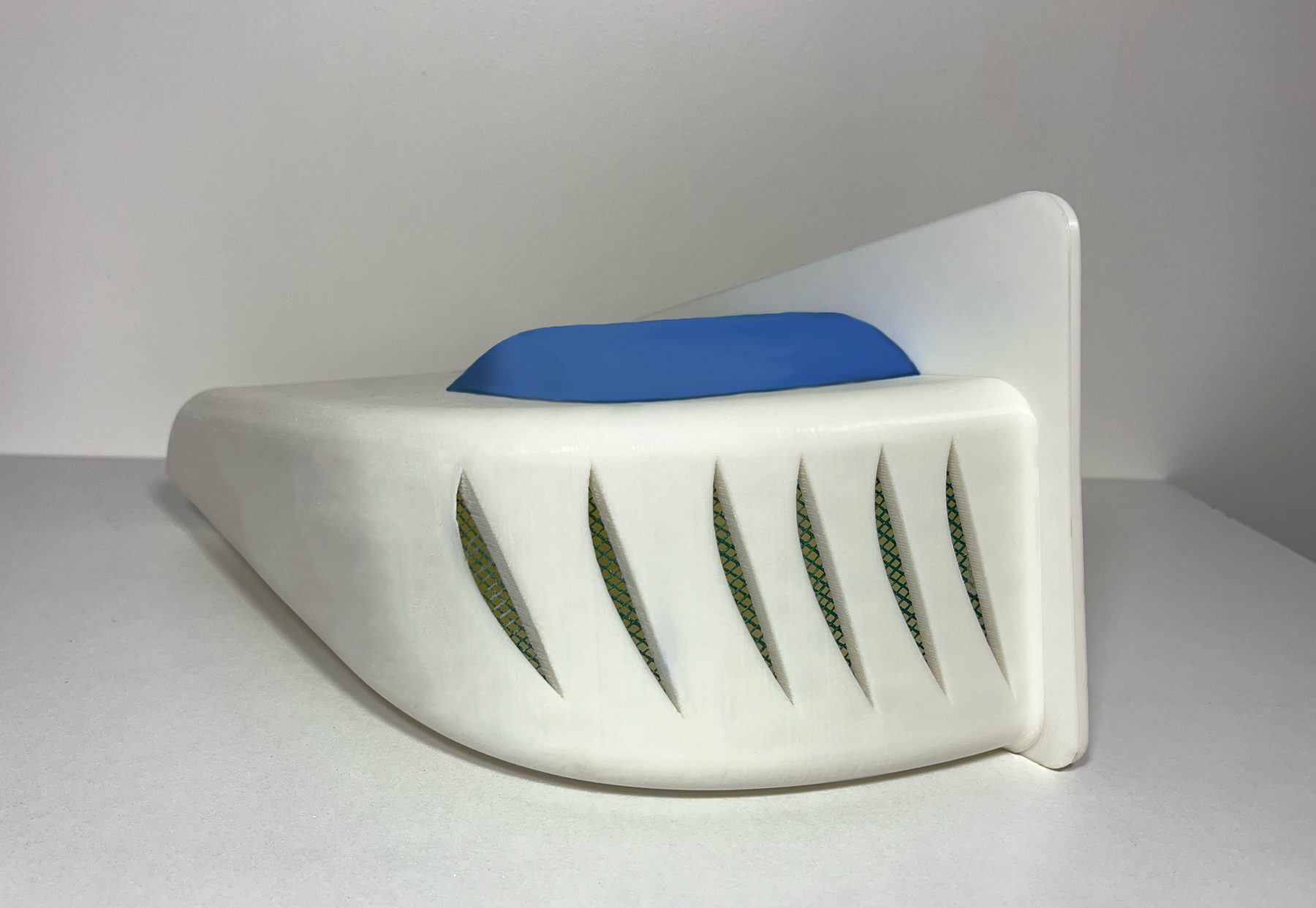
Gills is a compact unit that mounts magnetically to a cargo ship’s hull, with no drilling or dry-docking. As the ship travels it collects floating plastic, passes water through a secondary microplastic capture stage, and logs where plastic concentrates, using motion that is already happening, with no added fuel burn and no change of route. Its body is made from a sustainable flax composite.
Lighter means less
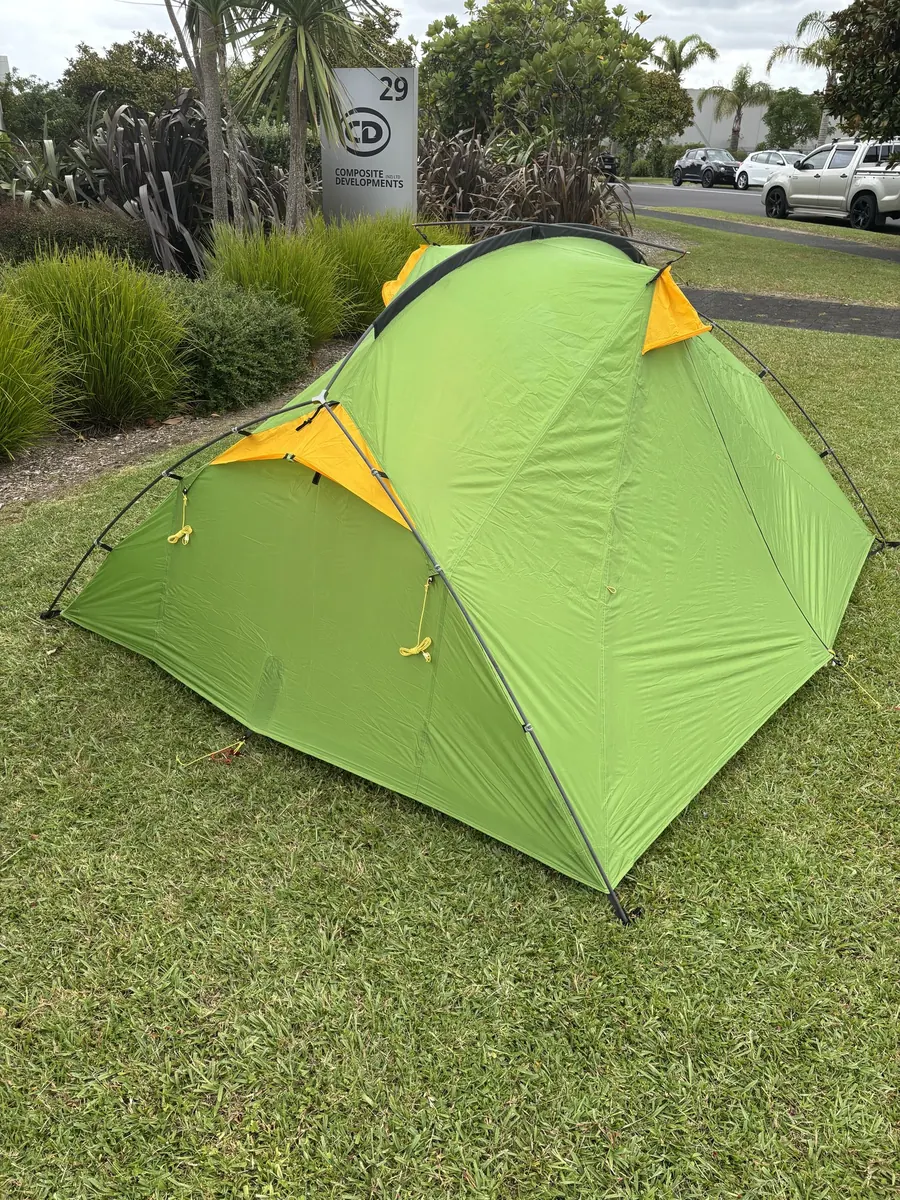
Designing ultralight outdoor gear is a lesson in using only the material a product truly needs. Starting from a sub-1 kg composite tent prototype, my work with Composite Developments grew into a two-person tent and an adaptable hiking pole, and brought carbon fibre poles into Orson Outdoor tents for the first time. Every gram removed is material that never has to be made, shipped or thrown away.
Starting with what already exists
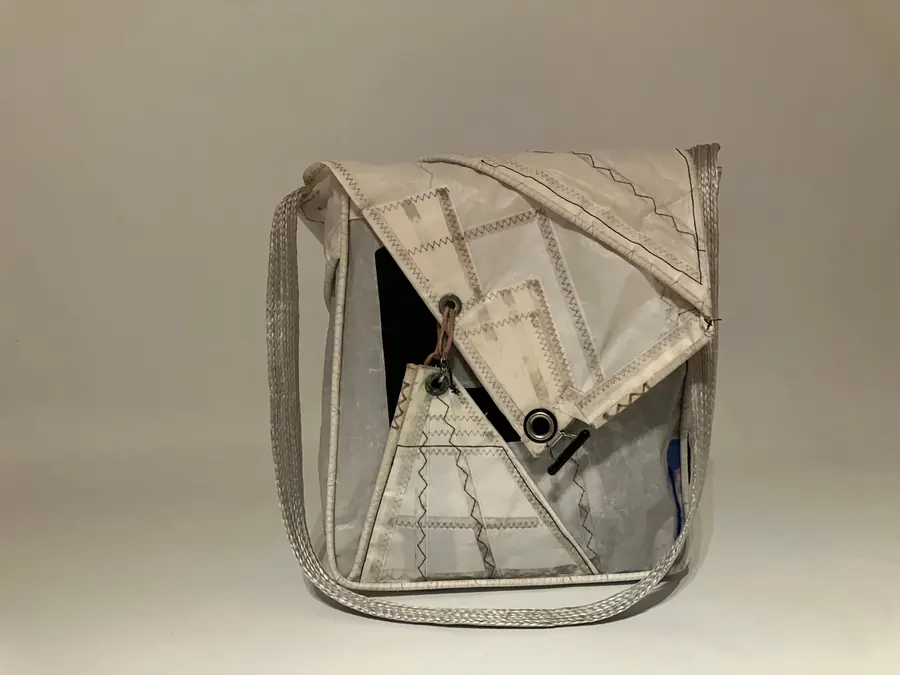
A lot of my personal work starts with waste. WIND is a sailing gear bag made entirely from old sails, recycled rope and worn dinghy hardware. ReLume turns salvaged parts into refined light fittings, Tideforms reworks leftover resin blocks into jewellery dishes, and Reclaimed Modernisation is a bedside table and desk organiser built from reclaimed timber and hardware.
The challenge each time is the same: make something people want because it’s well designed, not just because it’s recycled.